

Pineapple is one of those fruits most people buy with good intentions and then stare at on the counter for two days because cutting it feels like a project. The spiky exterior, the tough core, the juice running everywhere, and the eyes that seem impossible to remove cleanly all add up to an experience that puts people off. But pineapple cutting has a surprisingly elegant logic to it once you know the right approach. These 7 hacks change the whole process from frustrating to almost satisfying.
Cut the Bottom Off First, Not the Top
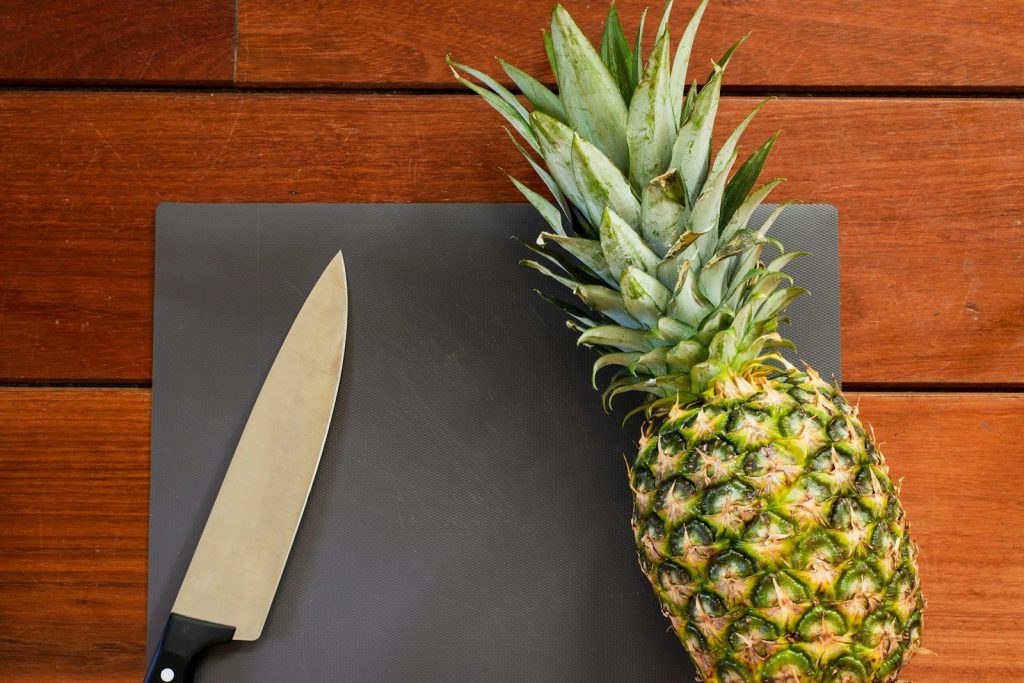
Almost everyone starts by slicing off the leafy crown. Experienced cooks start from the bottom. The base of a pineapple is the flattest and most stable end, which means cutting it first gives you a solid foundation to stand the fruit on for every cut that follows. Starting from the top leaves you balancing a wobbly fruit on a curved surface, which is where most pineapple cutting accidents happen. Flip your approach and the whole process immediately becomes more controlled and less messy.
Use a Serrated Knife Instead of a Chef’s Knife
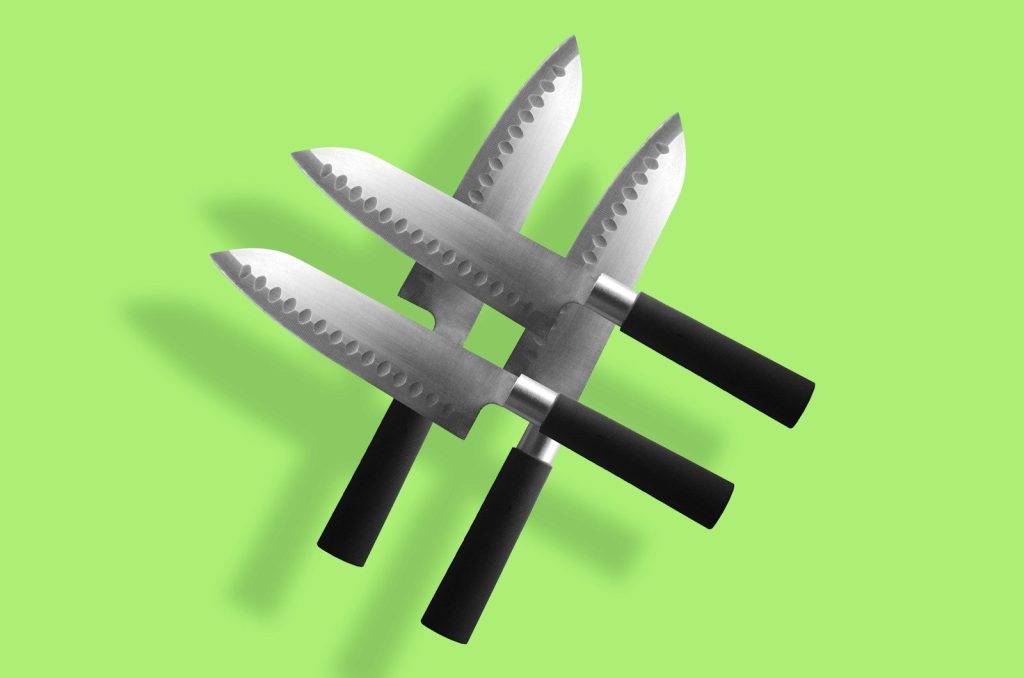
Most people reach for their biggest chef’s knife when facing a pineapple. A serrated bread knife actually does the job better. The tough, fibrous exterior of a pineapple resists the straight edge of a chef’s knife and requires a lot of downward pressure, which is where slipping happens. A serrated blade cuts through the skin in a sawing motion with far less force and gives you much cleaner control around the curved edges. It is one of those small tool swaps that makes an immediate difference.
Score the Flesh in Diagonal Lines to Remove the Eyes Without Wasting Fruit
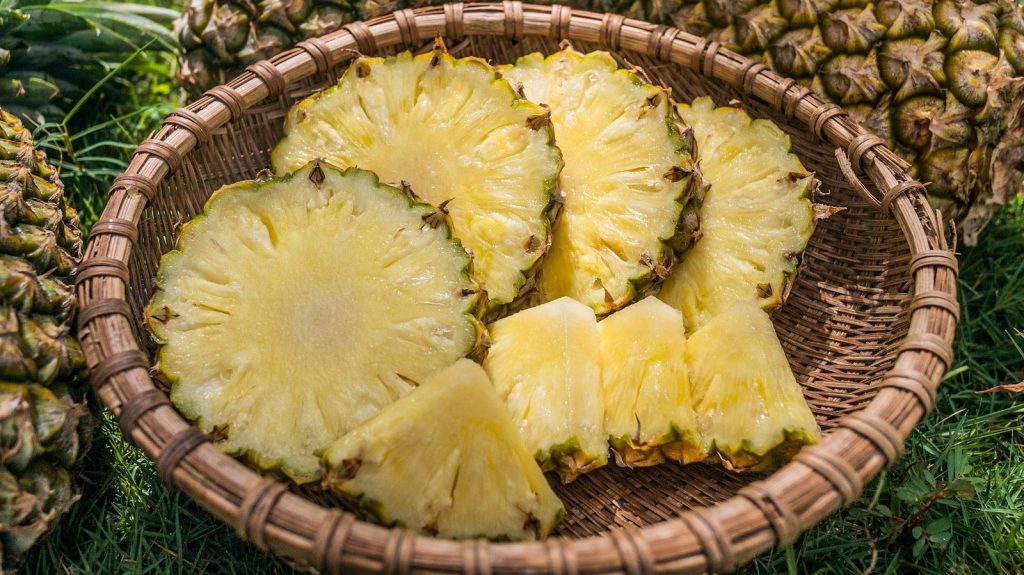
The small brown eyes embedded in pineapple flesh are one of the most annoying parts of the cutting process. Most people cut them out individually, which wastes a lot of fruit, or they shave so much off the outside that half the pineapple ends up in the bin. The hack is to notice that the eyes run in natural diagonal lines spiralling around the fruit. Scoring two shallow-angled cuts along each diagonal row creates a V-shaped channel that lifts out an entire row of eyes at once with almost no waste.
Store It Upside Down Before You Cut It
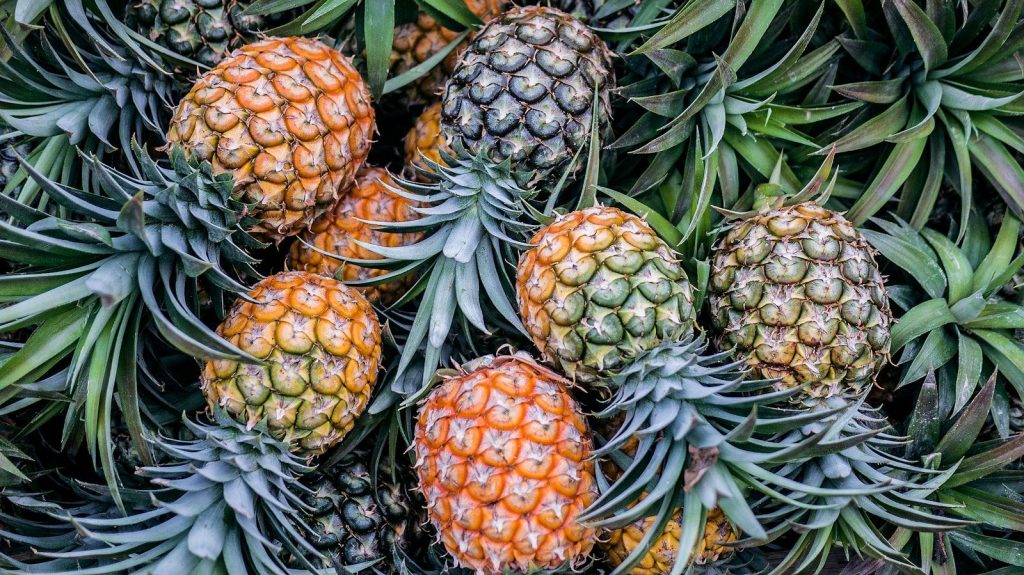
If your pineapple is not quite ripe or tastes sweeter at the bottom than the top, storing it upside down in the fridge for a day before cutting makes a genuine difference. The natural sugars in a pineapple settle toward the base due to gravity over time. Flipping it inverted allows those sugars to redistribute back through the fruit, resulting in more even sweetness from top to bottom when you finally cut into it. It requires no effort and the difference in taste is noticeable.
Cut Rings First If You Want Perfectly Even Pieces Every Time
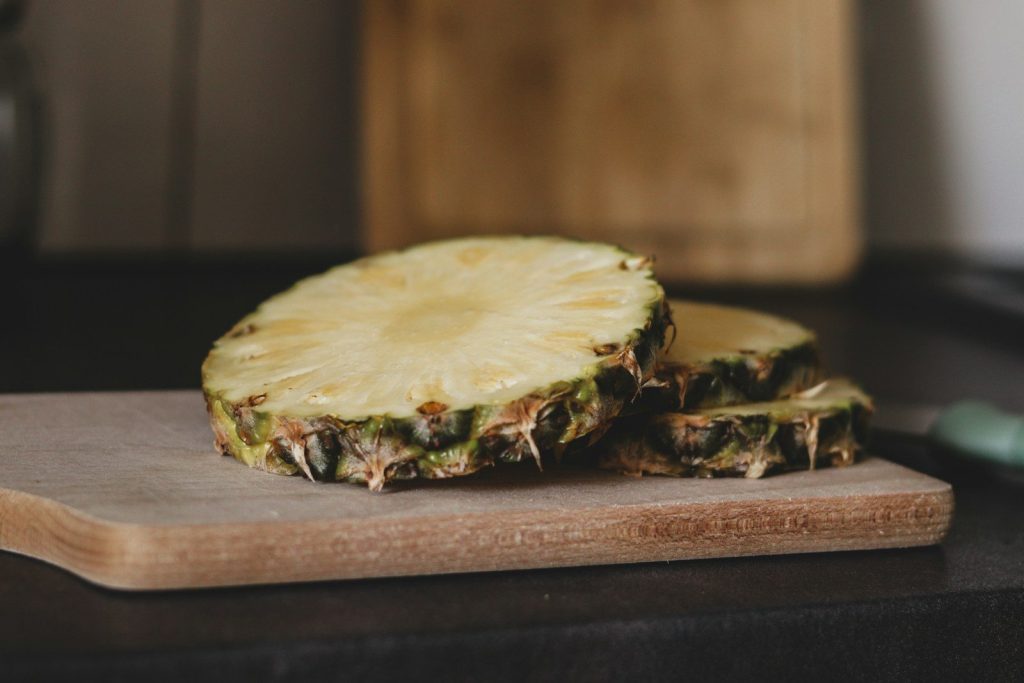
When most people try to cut pineapple into chunks they end up with uneven pieces because they are working with an already quartered fruit and eyeballing the sizing. Cutting the peeled pineapple into uniform rounds first, then using a small round cutter or knife to remove the core from each ring, and finally cutting those rings into chunks gives you perfectly even pieces every single time. It also makes the core removal much more precise and satisfying than trying to cut around it from the side.
Use the Core to Make Infused Water Instead of Throwing It Away
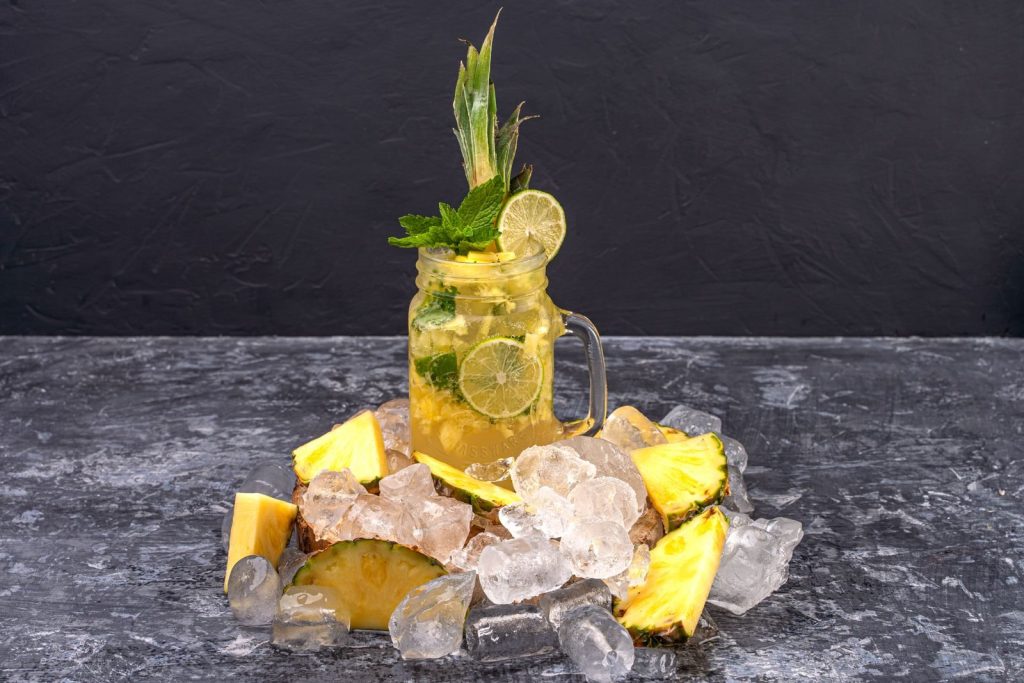
The tough central core of a pineapple gets discarded by almost everyone because it is too hard and fibrous to eat comfortably. But it is packed with flavour and a compound called bromelain that gives pineapple its characteristic tang. Dropping the core into a jug of cold water and leaving it in the fridge overnight produces a subtly sweet, tropical-infused water that tastes genuinely good. It gets use out of a part of the fruit that almost always goes straight into the bin and produces something worth drinking.
Chill the Pineapple Before Cutting for a Cleaner and Less Sticky Process
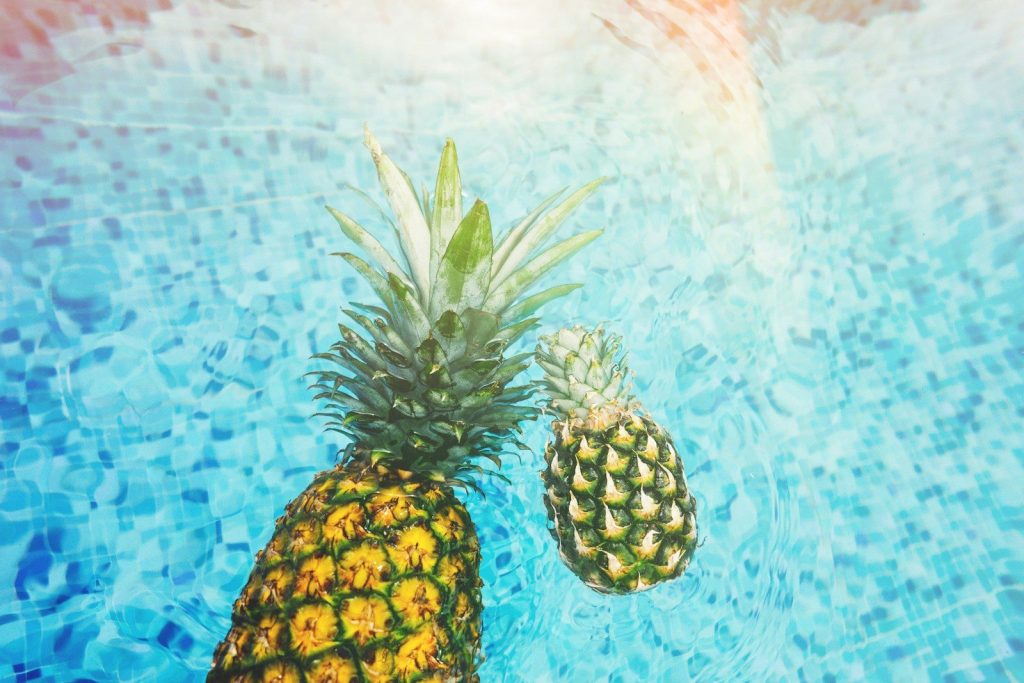
Cutting a pineapple at room temperature means dealing with juice running across your board, your hands, and your counter almost immediately. A pineapple that has been in the fridge for a couple of hours before cutting is firmer, releases less juice during cutting, and holds its shape better when you slice through it. The flesh stays cleaner on the board, the pieces hold together more neatly, and the whole process feels far less like a tropical disaster. It also tastes better cold, so there is no downside to this one at all.
Once You Cut a Pineapple the Right Way, You Will Never Go Back to Guessing
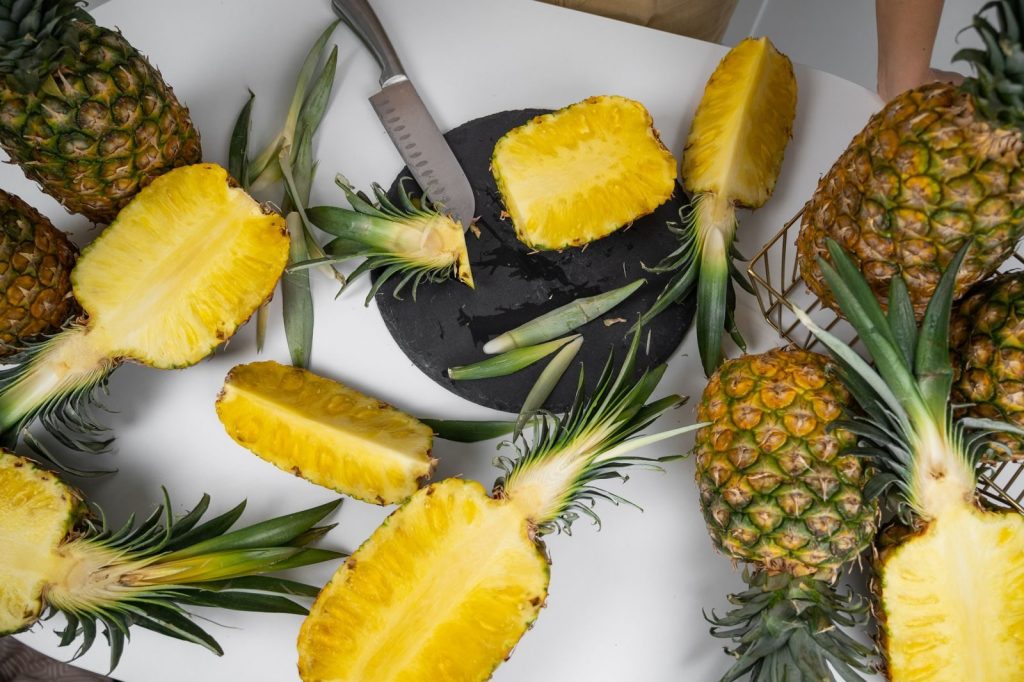
Pineapple has always been worth the effort. It is just that nobody really showed most of us the right way to approach it. With a few small adjustments to the order, the tools, and the technique, the whole process becomes something you can get through quickly and cleanly without losing half the fruit or the will to continue. A fresh pineapple on a weeknight stops feeling like a weekend project and starts feeling like a completely reasonable idea.